Bringing a piano into your home can feel like a big decision—but Sarah Binder believes it should also be fun, flexible, and accessible. We sat down with Sarah, president of our partner PianoPiano, to learn how growing up in a third-generation piano family shaped her relationship with the instrument, what inspired her to leave a career in law and join the family business, and how she has helped expand PianoPiano’s rental program.
In our conversation, Sarah shares her thoughts on what an acoustic piano can bring to a home, why renting can be a practical way for families to get a piano, what an acoustic piano can bring to a home, and why music doesn’t need to be a high-pressure pursuit to have lasting value in a person’s life.
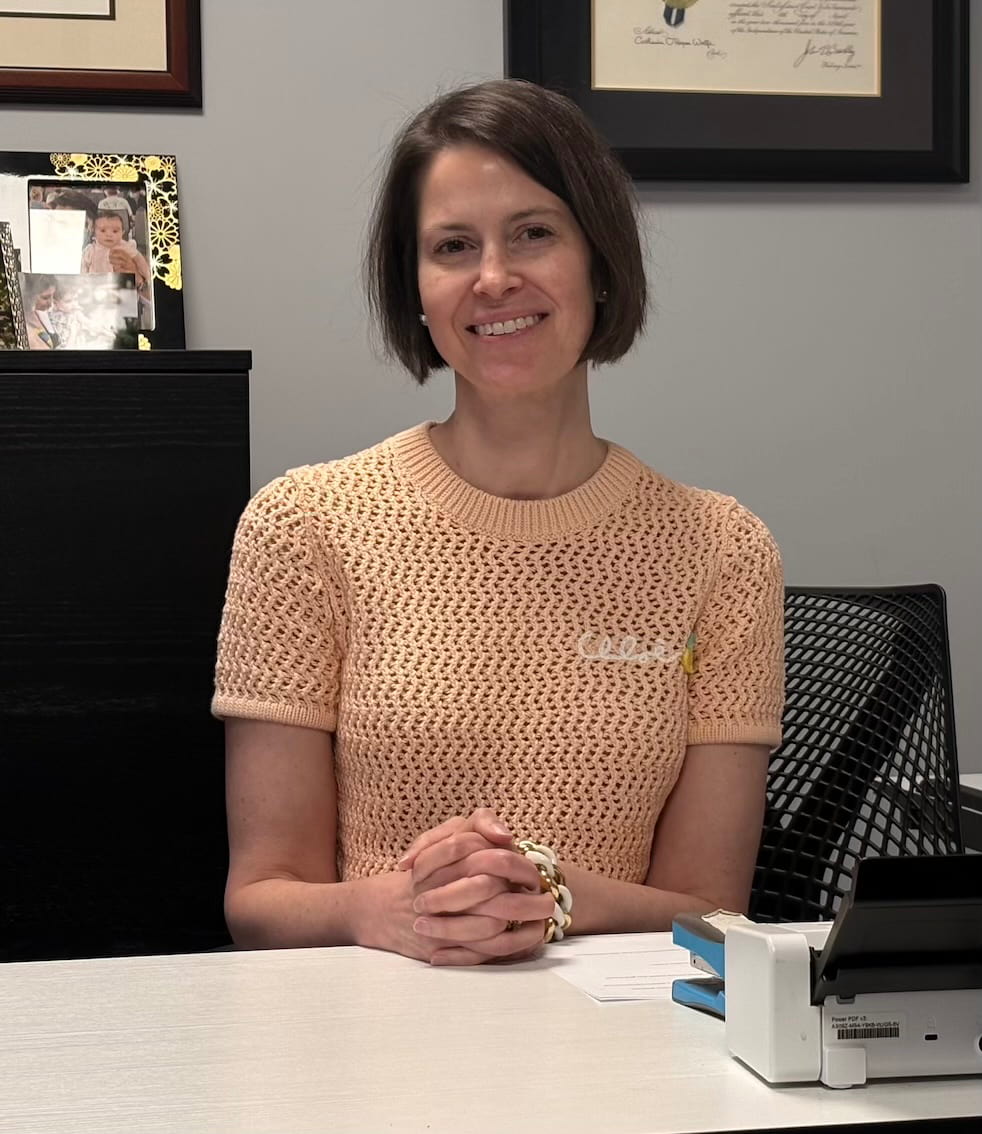
Meet Sarah!
Emma: So you were a lawyer (by training)?
Sarah: I grew up in and around New York City, and I’m the third generation in the piano business in my family, so I grew up around pianos, and after college I went to law school and practiced law for about 11 years, and after that I came back and I decided to join the family business. But, it didn’t feel that ‘different’ to me, because, I always say, I grew up in a piano store, I grew up under a piano. I remember playing underneath the piano, and my dad always had me coming in on the weekends. Back then they gave out a lot of paper brochures and I had to stamp them with our store name and add little stickers.
Emma: In this exact office?
Sarah: My father was the largest piano retailer in the country for a long time, he had 37 stores all over the east coast, and he carried every brand of piano you could imagine, and a bunch that don’t exist anymore, and our Manhattan showroom, our main showroom, was on 55th and 7th. That was actually where our rehearsal studios started as well and my dad kind of retired from the retail piano business, he still wanted to be involved with pianos so he had the rehearsal studio, and he started a rental program, as a sort of retirement hobby, and it just sort of grew out of control, and he realized there’s something here.
I was practicing as a lawyer, and I liked what I did, I just didn’t love being on somebody else’s schedule. I was getting to a point in my life where I was feeling like I wanted to do something for myself. I thought: let me see if I can help my dad, so I took a leave of absence from the law firm I was working at, I was like ok, if I don’t like the piano store I can always go back to the law and I came to help my dad and I just never left.
It’s been really great, my dad was sort of running this as a hobby and I said well, you know, I was younger I was in my 30s and if I want to help with this I want to take it in a more entrepreneurial direction, and I supercharged it and we’ve been expanding ever since. When I joined the piano rental we only served the New York Area, now we serve Boston, Philadelphia, DC, and all of Southern California.
Emma: Southern California, that’s far from here.
Sarah: We have a separate showroom, warehouse and delivery team out there.
Emma: Oh wow, ok.
Sarah: We have a violin school there that we partner with, we have pianos displayed at their school.
Emma: That’s awesome!
Sarah: It’s really cool! I mean, I never would have really imagined it. I mean, I think piano rentals are one of those things people don’t…most people don’t even know they exist. But when they find out about it they realize ‘oh, actually that’s a much better way to have a piano.
Emma: Yeah, as a piano teacher I always come across problems in families who might ‘oh, I don’t have that much money to afford a real piano’ so they settle for a keyboard and I tell them ‘hey, that’s not really, you know, it’s good for now but later on if you want to continue with lessons it’s maybe not the best choice’ Renting a piano hasn’t been in mind as an option to suggest either, but now that we’re talking I’m thinking like ‘oh, now I can also suggest renting a piano as an option for parents’.
Sarah: Yeah! I mean, your students can rent a piano from $48 a month, like, a real piano with 88 keys and a direct blow action, so, if your child starts out playing piano and you give them a keyboard with buttons and lights, that’s like a toy, that’s not an ‘instrument’ and so I think the child is less likely to take it seriously and stick with it.
And I think also as a teacher, once a parent has committed to a twelve-month piano rental, and they’re going to keep the piano in the house, they’re going to make sure their kid sticks with the lessons because ‘now we have a piano here’ so it works together to encourage each other and to make sure that the student is taking it seriously and at least giving it a real shot. You wouldn’t sign your kid up for baseball lessons and then, you know, give them a whiffle ball. (Laughs) Right? And on the other end, you wouldn’t sign them up for driving lessons and then go out and buy them a Ferrari. Piano rental sits right in the middle – you are setting your child up with the best chance of success without making an unnecessarily large investment.
Emma: (Laughs) But I get that, I mean, it was the same for my parents. I had a real piano when I first started and all of us had taken piano very seriously because of that.
Sarah: Right.
Emma: And the value comes not just from the fact that you’re putting money into this, but also you’re, you know, your mind and your heart is more invested in it.
Sarah: Right! Your mindset, and that ‘our family is taking this seriously, we’ve brought this instrument into our home’ and, you know, it’s a prominent feature when it’s in your living room, and so it just sends a signal to the children, ‘this is serious and you should take this seriously’.
Emma: Sure.
Sarah: And rental is a great option because it’s less expensive, and also people when they’re starting they don’t know how long they’ll stick with it, you know? Maybe my kids will like it and maybe they won’t, and even if you have enough money to run out and buy a piano, that can be a very expensive experiment. And with our piano rental you can always use your rental payments in the first twelve months towards a purchase of your piano.
So it’s a great way to try it, see if your kids stick with it, and then if they get serious about it you can always buy the piano you’ve been renting or any other of equal or greater value. So you can start with something less expensive, and if your child gets serious you can say, ok, let’s get a more professional size piano. So, you get ultimate flexibility.
Emma: One question I have, is, is there any sort of customer you like working with the the most? Beginners, teachers, professional pianists, or institutions?
Sarah: I mean, I love when families come in, especially with their children starting lessons, or maybe their children have been playing on a keyboard and now they’re finally ready to take it a little more seriously. I’m a mom, so I love seeing the kids come in and get excited about the piano. I always recommend to parents that if they’re coming to pick out a piano for their child they include their child in the process, because, it will be more fun for them that they got to help pick it out.
And, you know, it’s great to see that people are still interested in music and still interested in having a piano in their home, and making sure their children have the benefit of music lessons which are so beneficial for your brain, even if you don’t stick with it or become a serious pianist. There’s a study that found something like that having music for two years between the ages of 5 and 9 — any two years — can increase SAT scores by 35% in both math and language. I mean….you do better in language, you do better in math — there are just so many benefits around music. So, for me it’s always exciting to see families getting more serious about having music in their homes.
Emma: What about any interactions with professional musicians?
Sarah: I mean, when somebody well known comes in it’s always exciting and fun. We’ve had lots of very big name people come in and rent pianos because their children are starting lessons or their grandkids were starting lessons, and they saw that this was a great way to start with a real piano. And, you know, of course when somebody sits down to play and they can really play, it’s always enjoyable to listen, and one of the things that I love being in the rehearsal studio is that I hear professional musicians, including some very famous people, singing and playing music all day long. So of course it’s a joy to be around.
Emma: So, since this is a family business, did you grow up around musicians as well?
Sarah: You know, everyone in my family plays the piano but I would not call us a family of musicians. But, we all know how to play, we all love music. My father was a Steinway and Knabe dealer for a very long time, and Knabe at the time was the official piano of the Metropolitan Opera, so from the age of 4 years old I was going to the opera, we went to the philharmonic all the time, we saw, you know, every Broadway show you could think of and I think that sort of love of the arts definitely passed down to me, and now I have a four year old daughter and I’m trying to really…
Emma: Does she do the same thing?
Sarah: She’s a little young, but we just went to our first NY Philharmonic performance this weekend. They were doing Encanto the movie but they were playing the score live, and at the end, when Lin-Manuel Miranda showed up and jumped up on the stage it was like this amazing New York moment. (Laughs)
Emma: Wow
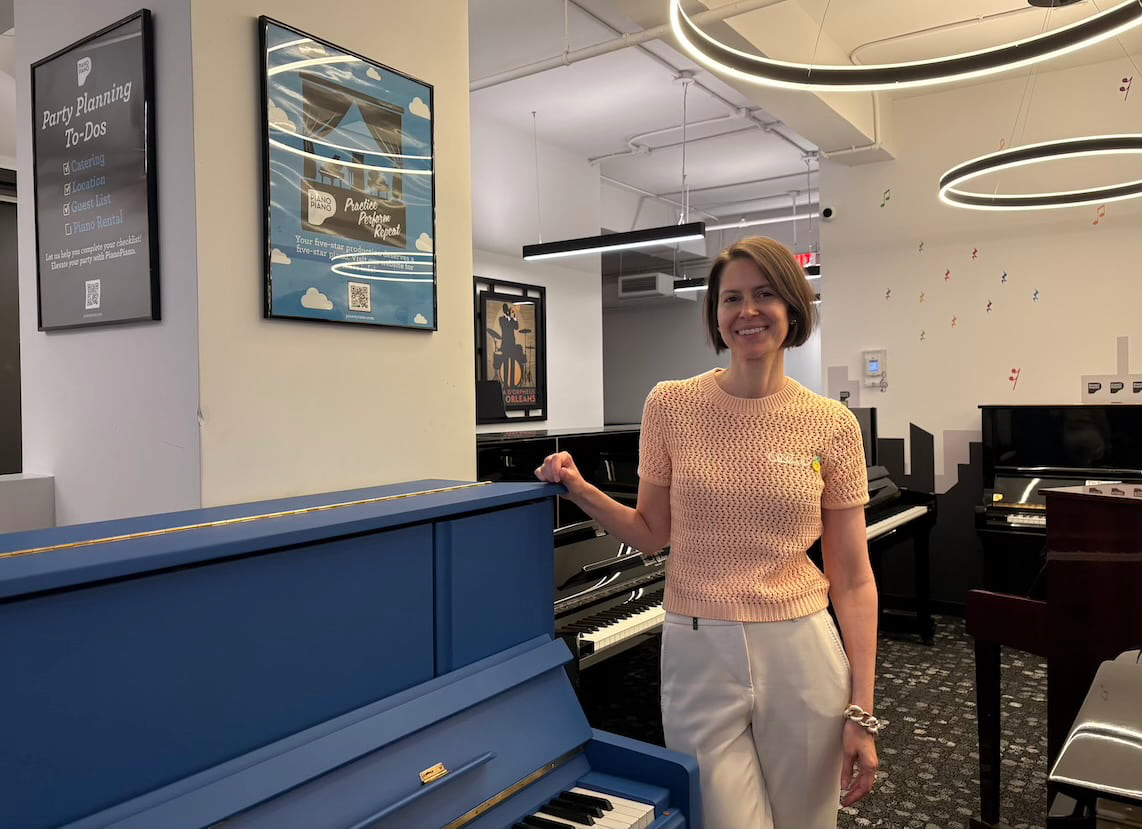
Emma: Is there anything that has surprised you about working with or around musicians, after coming from a non-musical professional background?
Sarah: I think the big difference for me, in coming from the corporate world to this business, has not really been the musical aspect. It’s been more of, you know, this is a small family-owned business, and we treat all our customers how we would want to be treated and especially, you know, people who come to the studios all the time, I know them really well and we’re friends.
And even our piano rental customers…we’ve had customers who have been renting from us for over a decade, you know? And we know that, and those were some of our first (rental) customers and I think that family aspect is just so different from the corporate world that I came from. And of course, being a small business owner there’s always challenges, you know? Covid happened, you know, then I feel like every week they invent a new way to torture us, I’m sure Alex (founder of NY Piano School) can appreciate that …
Emma: Laughs
Sarah: …but I think that being the captain of your own ship and having control over your schedule, it’s really really fulfilling to feel like ‘oh, I did this, I made this’ and when I see all the studios full or I see people coming in to rent pianos, I think..I give myself like a little pat on the back, it feels good!
Emma: Awesome! Yeah, I also have some corporate experience, I was in finance for about a year and a half although my background was in music. But I had this opportunity to do something in corporate, and experience it, and it was fine, but like you said, I wanted to….obviously my heart is in music so I wanted to do something related to music, and now I see….exactly like you, I build a relationship with the families who take lessons with us, and you know, the kids come in to their lessons and we become friends and those are things that you never get in the corporate world.
Sarah: Yeah, I think so. The client relationship in the corporate world is very different from both of our businesses, we’re dealing with families and children and it has its ups and downs but I think overall it’s nice to feel like you’re actually touching someone’s life.
Emma: Oh yeah, for sure, for sure. Switching gears a little: what do you think a piano adds to a home other than just being an instrument?
Sarah: I think that when I was growing up, where I grew up, everyone had a piano whether they played it or not, and I think its sort of a signal to people that ‘there’s culture in this home’, right? And it does elevate a space. I always joke, there’s a reason why every real housewife (from Real Housewives television series) does their confessional sitting in front of their grand piano. I doubt many of them play the piano but they all want to have one in their home, so I think it does signal something about what kind of family lives here, and their values, and that culture is important to them. And that education is important to them.
And a piano is beautiful, you know? And of course there’s the classic grand piano that looks gorgeous with the lid up, but even an upright piano, it’s a gathering place, you know? Everywhere I go, when I say I’m in the piano business I get stories from people about ‘my grandmother’s piano’ or ‘my piano growing up’ and it’s these incredible memories that people have. I think people are coming back to that idea. They want to make those memories for their own children. And it’s a screen free activity, which is rare these days. You can gather around the piano, you can sing. And a piano is elegant, it can make a space feel elegant, cozy, it really…it just gives good vibes.
Both Laugh
Emma: That’s great, that’s…I love what you mentioned about memories.
Sarah: Yeah…like…are your kids going to say ‘I remember when we were all looking at our cell phones’?
Both laugh
Emma: So, speaking of the digital world, do you think digital pianos have changed the way people think about acoustic pianos?
Sarah: I think that at the high end digital pianos do a lot of cool things that an acoustic piano probably can’t do. But I think that for the average pianist or somebody who’s taking piano lessons…you know, not every person who’s taking piano lessons thinks ‘one day I’ll be playing at Carnegie Hall’. They want to learn to play the piano, they want to enjoy it. I think for the most part digital pianos, even at that level, will never be the same as playing a real piano. I feel there’s a lot of misinformation out there. People choose digital pianos because they don’t have to tune it, or they think that it’s less expensive, or smaller for some reason. But, you know, a small compact case upright piano is the same size as a digital piano.
And it’s a real piano that you can play, and we actually have something called a silent system, that we can install into any acoustic piano, so that you get a real acoustic piano with a real action and the real feel of playing, but you can flip a switch, play silently with headphones. So a lot of families like that, especially with apartment living. So, to me that’s a better solution than a digital piano.
I’ll also say that a digital piano is technology, and as soon as you buy one the next year they come out with a new one and it’s obsolete. An acoustic piano has not had any technological improvement since 1921. So you don’t have to worry about it becoming obsolete.
Both laugh
Emma: That’s so true. You know, piano stores have a sort of ‘old world’ feeling. How do you see the role of the piano business today?
Sarah: I think one of the reasons we are in the piano rental business — and I really enjoy the piano rental business — is because it’s sort of changing the way people think about pianos. I think, you know, people think about going to the piano store and it does have this old school feel. It’s sort of one of the last places people think they have to engage in haggling, which for most people these days is not enjoyable, and piano stores are very quiet, you know, they can’t have music playing in a piano store because people need to play the piano, but when you walk in it just feels very somber. And I think a piano to most people is sort of mysterious: it has eight thousand moving parts, they don’t really know what makes one good, or not good, or what they’re supposed to be listening for. With us, we have a fun environment here. We don’t wear suits, we wear jeans, and we want to make having a piano in your home fun and not feel like such a big, heavy, serious decision.
You come in, you rent the piano, it’s not too expensive, you’re not making a major life decision. If you move in two years, you can switch your piano. You can buy the one you have if you love it, and you can take it with you. You can just send it back if you decide you don’t want it anymore. So we’re really trying to take that sort of ‘old school’ idea of having a piano out of the equation.
Emma: That’s awesome. I think that kind of correlates with how classical music, or piano itself, has always been a very ‘serious’ topic, you know? When parents enroll their child in lessons they often mention competitions or getting into school, and that kind of thing. Our approach (at NY Piano School) really emphasizes enjoying music and really being able to just appreciate the music. Even the adult students that I have, they want to know why the music sounds good when it does, maybe dig into some of the theory, but ultimately just to enjoy it, you know? They’re not thinking ‘I’m going to play at Carnegie Hall tomorrow.
Sarah: Yeah, I think the idea that you don’t have to be a ‘serious’ pianist, you can play the piano, you can pick up sheet music for songs you like, you can sing and play at home. I guess people don’t use sheet music anymore. You can download it.
Both laugh
Sarah: But I think…look, of course there’s nothing wrong with becoming an extremely accomplished pianist. I go to Carnegie Hall, I listen to all those people, there’s some I really love. But I think for the average person, it’s like…you don’t get your kids into basketball thinking they’re going to be Jaylen Brunson…it’s just good for them to do sports and be on a team, and learn those skills, right?
Yes, some people will go on and play professionally but most won’t, but it’s still a good use of your time, and I think it’s the same thing with music and piano. It’s great for your brain, it’s a great hobby to have, screen-free…it’s a good wintertime activity, you know?
Emma: Oh for sure.
Sarah: I think about just playing Christmas carols, all those happy families.
Emma: Oh yeah, that’s really nice. Going back to the topic of the instruments: is there any favorite model of piano that you have here in the showroom?
Sarah: My favorite is also the one I have at home. We have our own…it’s not our own brand, but…it’s called K-Pop, and it stands for Korean Pre-Owned Pianos, and these are pianos that are originally made in South Korea in the 1990s and 2000s, and we have them refurbished by people in Korea who used to work in the factory and they’re painted all these fun colors. That’s the ‘pop’ part. And we can actually do custom colors in any color people want, and we have six standard colors that we carry.
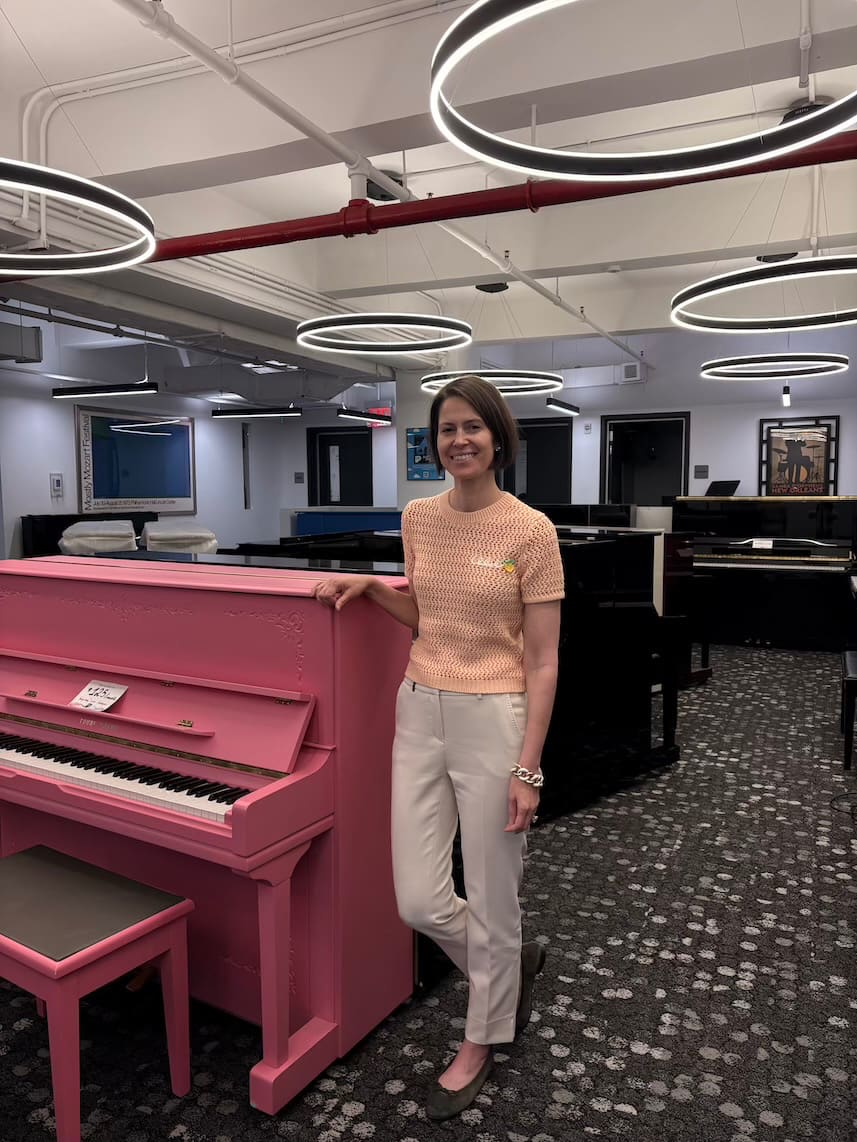
And these are great, especially for kids starting lessons, or maybe your home is more ‘fun’ and not as ‘serious’. They’re made by Young Chang and Weber, they’re great instruments, they’ll last forever, and it just makes it a little bit more joyful to be sitting at the piano and they’re also really good for the earth, because pianos are made out of eight kinds of wood, so if we can refurbish and reuse pianos we can save eight different trees.
Emma: That’s a lot of…
Sarah: That’s a lot of trees!
Both laugh
Emma: Last but not least: if you had to describe PianoPiano in one sentence, what would you say?
Sarah: That’s tough to do, but I’d say: We want to make having a piano fun and easy. Our tagline used to be ‘we make it easy to play’. And the idea is that you can go on the computer, give us a call, whatever…click, click…and a piano shows up at your house. And when you’re done with it you can call us up and it will go away. It doesn’t have to be super serious, it doesn’t have to be an agonizing or expensive decision. It’s something you can bring into your home and enjoy, and if you decide it’s not for you, you can move on. And that’s sort of what we’re here to do. We’re here to make having a piano accessible and affordable.
Rent a Piano. Learn to Play.
If Sarah’s story has you thinking about bringing a piano into your home, visit our friends at PianoPiano to explore their rental options. Need lessons to go with your new instrument? NY Piano School offers piano lessons for children and adults at every level—whether you’re just getting started or looking to take your playing further.

