
Johannes Brahms: Composer, Pianist, and Architect of Late-Romantic Music
Johannes Brahms (1833–1897) stands as one of the central figures of the Romantic era. His music combines expressive depth with an exceptional command of classical structure, earning him a reputation as both a traditionalist and an innovator. Today, Brahms is remembered not only for his emotional intensity and craftsmanship, but also for his influence on generations of composers who admired the balance and clarity of his work.
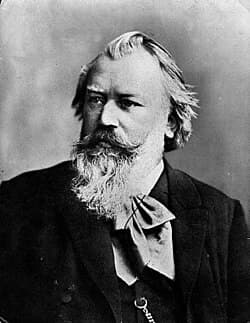
Early Life and Musical Training
Brahms was born in Hamburg to a modest but musical family. His father, Johann Jakob Brahms, was a professional musician who played double bass and horn, and he provided his son’s earliest instruction. Johannes showed strong talent at an early age, performing publicly as a teenager and quickly gaining attention for his abilities.
His most influential teacher was Eduard Marxsen, a respected pianist and composer who had direct connections to Beethoven-era traditions. Marxsen trained Brahms not only in piano technique but in harmony, counterpoint, and the rigorous compositional methods that later became fundamental to Brahms’ style.
By his early twenties, Brahms had already established a reputation as a gifted pianist and emerging composer. A key moment came when he met Robert and Clara Schumann; Robert Schumann famously published an article praising Brahms as the future of German music, a prediction that proved accurate.
Brahms’ Musical Style and Why He Matters
Brahms’ music is admired for its structural clarity, depth of expression, and intellectual precision. He valued traditional forms such as sonata form, theme and variations, and contrapuntal writing, but he used them with Romantic expressiveness and a powerful emotional range.
Brahms’ music is defined by rich, complex harmonies, long and beautifully shaped melodies, a strong rhythmic drive with frequent cross-rhythms, an exceptional command of variation and thematic development, and a careful, meticulous approach to musical craft.
His perfectionism was legendary. Brahms destroyed many early compositions because he believed they didn’t meet his standards. The works that survive are almost all mature, deeply considered pieces.
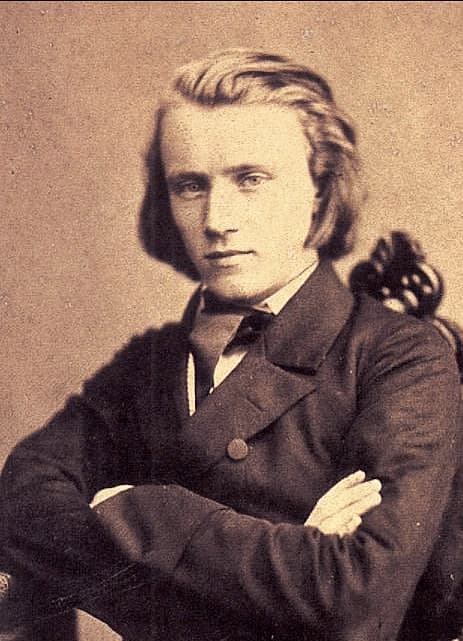
What Instruments Did Brahms Play?
Although Brahms was first and foremost a pianist, he also learned the horn and cello during his youth. This broader instrumental experience influenced his understanding of orchestration and helped him write idiomatically for many instruments. In addition to playing and composing, Brahms was active as a conductor, especially later in his career.
Famous Works by Johanes Brahms
Brahms’ catalog spans nearly every major genre of his time except opera. Some of his best-known compositions include:
Symphonies
Symphony No. 1 in C minor, Op. 68 – A powerful work that took him over a decade to complete.
- Symphony No. 2 in D major, Op. 73 – Warm, expansive, and lyrical.
- Symphony No. 3 in F major, Op. 90 – Compact, concentrated, and tightly constructed.
- Symphony No. 4 in E minor, Op. 98 – Famous for its grand finale built as a theme and variations.
Concertos
- Piano Concerto No. 1 in D minor, Op. 15
- Piano Concerto No. 2 in B-flat major, Op. 83
- Violin Concerto in D major, Op. 77
- Double Concerto for Violin and Cello, Op. 102
Choral Music
- A German Requiem, Op. 45 – One of Brahms’ most important works, written after the death of his mother. It remains a central masterpiece of the choral repertoire.
Piano Works
Brahms wrote extensively for piano throughout his life:
- Variations on a Theme by Paganini – Fiendishly difficult and brilliantly constructed.
- Ballades, Rhapsodies, Klavierstucke– Expressive, intimate works loved and admired by pianists worldwide.
Chamber Music
Brahms is responsible for some of the greatest works in the chamber music literature:
- Piano Quintet in F minor – Op. 34
- Violin Sonatas:
- Violin Sonata No. 1 in G major – Op. 78
- Violin Sonata No. 2 in A major – Op. 100
- Violin Sonata No. 3 in D minor – Op. 108
- Cello Sonatas:
- Cello Sonata No. 1 in E minor – Op. 38
- Cello Sonata No. 2 in F major – Op. 99
- Clarinet Quintet in B minor – Op. 115
Songs
Brahms composed more than 200 Lieder, including the popular “Wiegenlied” (Lullaby), Op. 49 No. 4.
What Makes Brahms Special?
Brahms’ music combines emotional intensity with meticulous craftsmanship. His mastery of form, counterpoint, and thematic development places him in direct lineage with Bach, Mozart, and Beethoven, while his harmonies and textures firmly place him in the Romantic world.
His dual identityas both a guardian of tradition and an innovator gives his music lasting appeal. It feels both solidly structured and richly expressive.
His personal dedication to quality also shaped his legacy. Since he frequently destroyed works he considered unworthy, the body of music he left behind shows consistency and remarkable depth.
Brahms’ Legacy
By the time of his death in Vienna in 1897, Brahms was one of the most respected figures in European music. His works quickly became central to concert programs and remain standard repertoire for pianists, orchestras, and chamber ensembles today.
His influence also extended to later composers, including those in the early 20th century who saw Brahms’ balance of tradition and modern sensibility as a model for their own writing.
Studying Brahms’ music can be especially rewarding for piano students, since his works combine expressive depth with clear underlying structure—an ideal combination for developing technique, musicality, and interpretive confidence. His piano works also make strong audition pieces, offering a chance to demonstrate tone, control, and thoughtful interpretation. If you’d like guidance in preparing Brahms for an audition or simply want to deepen your understanding of this repertoire, NY Piano School offers custom audition preparation and private piano lessons in Manhattan. We work with students of all levels and would be glad to help you explore Brahms or any music that inspires you.

